
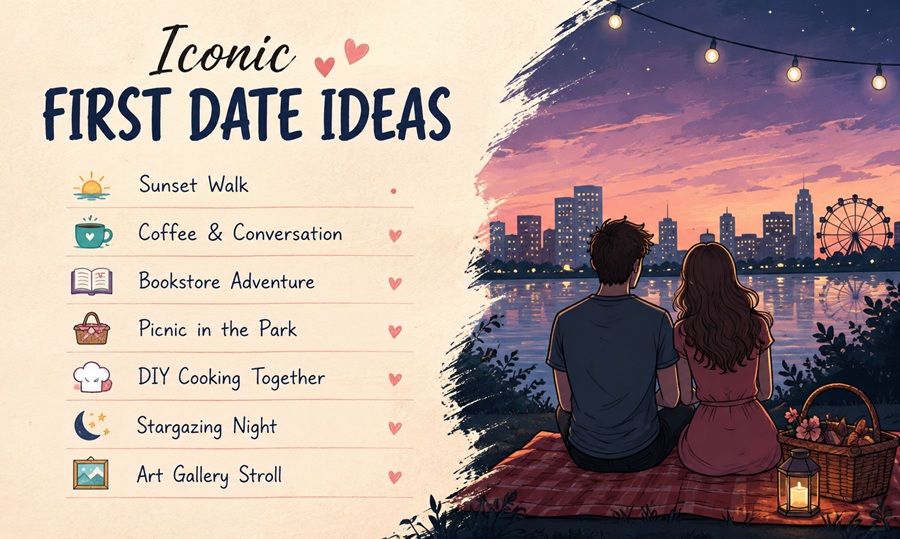
Iconic first dates balance low pressure with genuine conversation opportunities — think coffee shops, walking tours, food markets, or mini golf. The best choices avoid loud environments, keep costs moderate, and give both people an easy exit if there’s no spark.
An iconic first date isn’t necessarily the most elaborate one — it’s the one people still talk about years later, either because it was genuinely fun or because it created an easy, memorable story. The ideas below have earned their staying power because they balance conversation space, low financial risk, and built-in activity in case conversation lulls.
There’s also a practical psychology behind why certain formats keep working decade after decade. Side-by-side activities — walking, an activity with your hands busy, a shared task — tend to lower anxiety compared to sitting directly across a table with nothing to do but talk and make eye contact. That’s part of why so many enduringly popular first dates involve some form of light movement or shared task rather than a static sit-down dinner, which many daters now consider a second or third date format rather than a first.
1–8: Classic Low-Pressure Dates
These formats have remained popular for good reason: they’re short enough to gracefully end if there’s no connection, and casual enough that neither person feels overly scrutinized.
- Coffee shop meetup — the original low-stakes classic, easy to extend or end naturally
- Casual brunch — daytime dates reduce pressure compared to dinner and give a built-in, socially acceptable end time
- Bookstore browsing — gives natural conversation prompts without forced eye contact, since you’re both looking at shelves rather than staring at each other
- Farmers market stroll — relaxed pace, plenty to talk about, and a chance to see how someone interacts with vendors and makes small decisions
- Ice cream or dessert date — short, sweet, and cheap, ideal for a quick weekday connection
- Walk in a park or botanical garden — movement eases nerves better than sitting still, and scenery provides an easy fallback topic
- Bakery or pastry tasting — a shared small ritual that feels intimate without being heavy
- Local coffee crawl — visiting two or three nearby cafes adds built-in structure and a natural sense of progression through the date
9–16: Activity-Based Dates
Activity-based dates work especially well for people who find prolonged direct conversation intimidating, since the activity itself provides a steady stream of natural talking points.
- Mini golf — playful competition breaks the ice fast and reveals a bit about someone’s personality under light pressure
- Bowling — same benefit, plus it’s widely accessible and inexpensive
- Trivia night at a local bar — great for two who like banter, and it’s a good early signal of shared interests or humor style
- Cooking class — shared task-based bonding with a tangible result you both get to enjoy at the end
- Pottery or paint-and-sip class — creative, low-pressure, conversation-friendly, and a nice option for people who don’t drink heavily
- Escape room — builds teamwork fast, good for high-energy personalities who enjoy problem-solving together
- Bike ride along a scenic trail — active but not overly athletic, and it opens up conversation about fitness habits and outdoor interests
- Museum or gallery visit — endless conversation starters built into the environment, and pace can be adjusted easily depending on how the date is going
17–25: Memorable & Slightly Adventurous
This tier suits daters who already feel some initial spark through messaging and want a date that leaves a stronger impression.
- Rooftop bar with a view — elevated but not overly formal, and the setting alone often becomes part of the story
- Food truck festival — casual grazing keeps things light, with variety that suits picky and adventurous eaters alike
- Outdoor movie screening — shared experience with minimal pressure to talk constantly, good for introverted personalities
- Karaoke — a strong filter for compatibility and fun personalities, and it tends to reveal confidence and playfulness quickly
- Aquarium or zoo visit — daytime, easygoing, plenty to point at and discuss, especially good for a slightly longer first date
- Wine or beer tasting — structured conversation around a shared activity, with built-in pacing between tasting flights
- Stargazing at a local park or observatory — quiet, intimate, memorable, particularly well-suited to a third or fourth date but increasingly popular for adventurous first dates too
- Vintage or thrift shopping together — reveals a lot about compatibility fast, since personal style and decision-making habits become visible quickly
- Sunset picnic — simple, affordable, and consistently rated among the most romantic first-date formats, combining scenery, conversation, and low cost
How to Pick the Right One for Your Match
The best approach isn’t picking whatever idea sounds most impressive — it’s matching the format to what you already know about the other person from messaging beforehand. Someone who mentions loving trivia nights or board games in their profile is signaling a preference for playful, activity-based connection, while someone who talks about slow mornings and quiet coffee shops is likely to feel more comfortable with a lower-key format.
It’s also worth considering your own comfort level rather than only theirs. A first date works best when both people can be relatively relaxed, so choosing a format that plays to your own strengths — whether that’s witty banter over trivia or comfortable quiet during a walk — tends to produce a more authentic version of yourself than forcing an activity that makes you anxious.
Logistics That Make Any Date Idea Better
- Pick a location roughly equidistant for both people when possible
- Confirm the date and time at least a day in advance to avoid last-minute scrambling
- Have a backup plan in mind in case of weather or unexpected closures
- Avoid scheduling anything immediately after the date that creates time pressure
- Choose a venue you’re at least somewhat familiar with so you’re not navigating an unfamiliar space while also making a first impression
Conversation Starters to Pair With Any Date Idea
Even the best-chosen activity benefits from a few conversation starters in your back pocket for natural lulls. Open-ended questions tend to work better than yes-or-no ones — asking what someone’s most memorable trip was, rather than simply whether they like to travel, invites a fuller answer and a more genuine exchange.
It’s also worth resisting the urge to treat a first date like a job interview, working through a mental checklist of questions in sequence. Letting the conversation follow its own natural tangents, even if it means not covering every planned topic, usually produces a more relaxed, authentic connection than a rigid back-and-forth.
Reading the Room: When to Extend or End a Date
Part of choosing a good first date format is building in flexibility to read how things are going. A coffee date that’s clicking can naturally extend into a walk or a second round; one that isn’t can end cleanly at the original planned time without either person feeling awkward about cutting things short.
Paying attention to your date’s body language and energy — as well as your own — is a useful skill here. Genuine engagement usually shows up as leaning in, asking follow-up questions, and losing track of time, while polite disengagement often looks like checking the time, shorter answers, or a slight physical pulling back.
Frequently Asked Questions
1. How long should a first date last?
One to two hours is generally ideal — long enough to gauge connection, short enough to leave people wanting more if it goes well, and easy to extend informally (grabbing a second coffee, walking a bit further) if things are clicking.
2. Should the first date be during the day or at night?
Daytime dates tend to feel lower-pressure and give a natural, casual end point, though evening dates work well for people who prefer a more traditional feel and have more flexible schedules.
3. Who should choose the first date location?
Whoever suggested the date typically proposes the location, but it’s good practice to offer two options and let the other person pick, which also signals consideration for their preferences and comfort.
4. Is it okay to suggest a cheap first date?
Absolutely — cost has little bearing on connection, and many of the most memorable first dates (coffee, walks, ice cream) cost under $20, letting the focus stay on conversation rather than an expensive production.
5. What if there’s no chemistry on the date?
Choosing a shorter, lower-commitment activity like coffee or a walk makes it easy to end the date naturally and respectfully if there’s no spark, without either person feeling trapped in a long dinner reservation.
6. Should I plan the whole date or leave room for spontaneity?
Having a loose plan with a natural endpoint works best — enough structure to avoid awkward dead time, but enough flexibility to extend the date informally if things are going well.
7. Is it okay to suggest the same first date idea to multiple matches?
Yes, reusing a format you know works well for you is completely reasonable, since the value of these ideas comes from how they’re suited to easy conversation, not novelty for its own sake.