
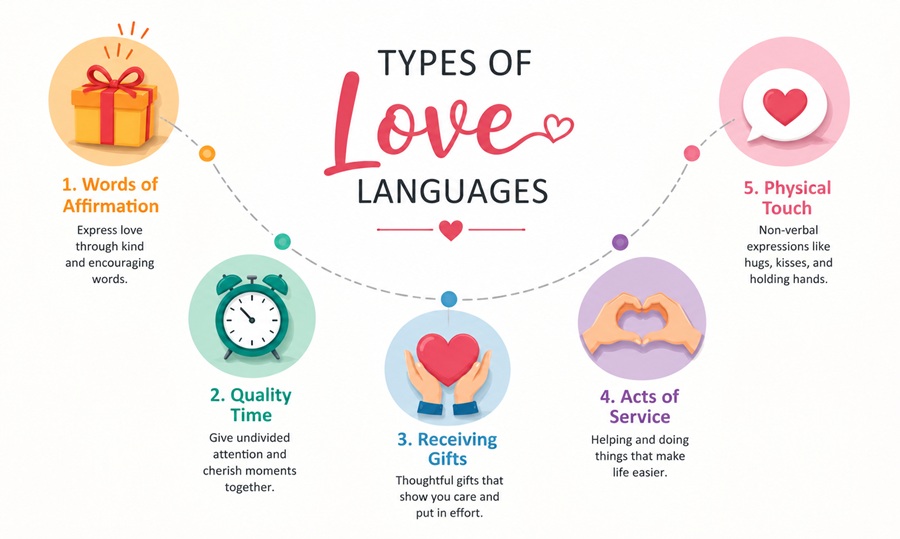
There are five recognized love languages: words of affirmation, quality time, receiving gifts, acts of service, and physical touch. The concept, developed by counselor Gary Chapman, describes the different ways people prefer to give and receive affection in relationships.
Below is a breakdown of each type, what it looks like in practice, and how the languages tend to interact with one another.
Words of Affirmation
This language centers on verbal and written expressions of love, appreciation, and encouragement. For someone whose primary language is words of affirmation, hearing “I appreciate you” or “I’m proud of you” carries more weight than a gift or gesture.
What it typically looks like:
- Verbal compliments and encouragement
- Text messages expressing appreciation
- Specific, genuine praise rather than generic compliments
People with this love language are often more affected by harsh or critical words too, since verbal communication carries extra emotional weight for them in both directions.
Quality Time
Quality time is about focused, undivided attention. It’s not simply being in the same room together; it’s the difference between sitting next to someone while both of you scroll your phones and having a conversation with no distractions.
This language often includes:
- Uninterrupted conversations without phones or other distractions
- Shared activities where both people are actively engaged
- Regular one-on-one time, even in small amounts
For someone with this primary language, a distracted partner during time together can feel more hurtful than a missed date altogether.
Receiving Gifts
This language isn’t about materialism. It’s about the thoughtfulness behind a gift, the sense that a partner was thinking of them even when apart. A meaningful gift doesn’t need to be expensive; a small item that shows attention to their specific interests often matters more than cost.
Common expressions include:
- A small item that reflects a specific conversation or interest
- Handwritten notes or cards
- Gifts given without a special occasion attached
For people with this love language, forgetting significant dates can feel more painful than it would for someone whose primary language is different.
Acts of Service
Acts of service means showing love through helpful actions rather than words. Cooking a meal, handling a chore without being asked, or helping with a task a partner is dreading are all expressions of this language.
This language is often summarized as “actions over words,” since someone with this primary language may value a partner doing the dishes unprompted more than hearing a verbal compliment.
Typical examples:
- Taking a task off a partner’s plate without being asked
- Helping with something the other person finds stressful or tedious
- Following through reliably on commitments
Physical Touch
Physical touch includes both affectionate and non-sexual touch, like holding hands, hugging, or sitting close together, as well as physical intimacy. For someone with this primary language, physical closeness communicates security and connection in a way words or gestures don’t fully replace.
This can include:
- Hugs, hand-holding, and casual physical closeness
- Sitting near each other during everyday activities
- Physical affection during both happy and difficult moments
How the Five Languages Work Together
Most people don’t have just one love language; they usually have a primary language and a secondary one, with the others still mattering to some degree. Partners often have different primary languages, which is a common source of miscommunication. One partner might show love constantly through acts of service while the other partner is waiting to hear it in words, and both can feel unappreciated despite genuine effort on both sides.
Recognizing a partner’s primary language doesn’t mean abandoning your own natural way of expressing affection. It means intentionally adding a few gestures in their language so the connection registers the way it’s meant to.
Why Knowing Your Love Language Helps
Understanding love languages gives couples a shared vocabulary for something that used to be vague (“I just don’t feel loved lately”). Instead of guessing, partners can talk specifically about what makes them feel cared for, which tends to reduce repeated arguments about feeling unappreciated.
Frequently Asked Questions
Can a person have more than one primary love language?
Yes. Many people have two languages that feel roughly equally important, rather than one language standing far above the rest.
Do love languages apply to friendships and family, not just romance?
Yes. The same framework is often used to describe how people give and receive appreciation in friendships, parent-child relationships, and even workplace recognition.
Can your love language change over time?
It can shift, particularly during major life changes like having children, going through stress, or long periods of separation from a partner.
Is one love language “better” than the others?
No. Each language reflects a different way of experiencing connection, and none is inherently superior.
What if my partner and I have completely different love languages?
This is common and manageable. The key is learning your partner’s language and making a deliberate effort to express affection in that language rather than only your own.