
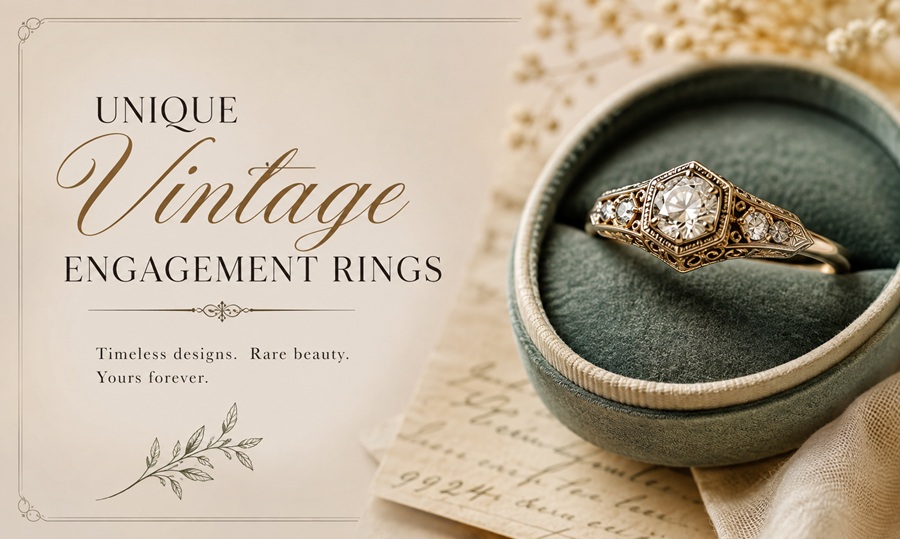
Quick Answer: Unique vintage engagement rings typically fall into distinct eras — Victorian, Edwardian, Art Deco, Retro — each with recognizable design features. Authentic vintage pieces offer one-of-a-kind craftsmanship, though buyers should verify authenticity and condition through a qualified appraiser before purchasing.
Why Choose Vintage Over Modern
Vintage engagement rings appeal to buyers seeking a piece with history, distinctive craftsmanship, and a design unlikely to be duplicated on someone else’s hand. Unlike mass-produced modern settings, vintage rings often carry hand-engraving, filigree work, and design details specific to the era they came from.
There’s also a sustainability angle that appeals to a growing number of buyers: choosing a vintage piece means no new mining or metal extraction is required, since the materials are already in circulation. For couples who care about environmental impact but still want a genuine diamond or gemstone, vintage shopping offers a meaningful middle ground.
Victorian Era (1837–1901)
Victorian rings favor romantic, nature-inspired motifs — flowers, bows, and serpents (a symbol of eternal love during this period) appear frequently. Old mine cut and rose cut diamonds, with their soft, candlelit sparkle, are hallmarks of authentic Victorian pieces.
This era also spans several sub-periods with slightly different aesthetics — early Victorian pieces tend toward more delicate, sentimental designs, while later Victorian (sometimes called the “Late” or “Aesthetic” period) introduced bolder, more architectural elements as design sensibilities shifted toward the turn of the century.
Edwardian Era (1901–1915)
Edwardian rings introduced delicate platinum filigree work, made possible by advances in metalworking that allowed for intricate, lace-like settings. Milgrain edging — tiny beaded detailing along metal edges — is a signature feature of this period, and the overall aesthetic leans toward airy, light, and highly feminine designs compared to the heavier gold work common in earlier eras.
Art Deco Era (1920s–1930s)
Art Deco rings are instantly recognizable for their geometric symmetry, bold contrasts, and use of colored gemstones alongside diamonds. This era favored clean lines and architectural influence over the softer romanticism of earlier periods, reflecting the broader design movements happening in architecture and visual art at the time.
Retro Era (1940s–1950s)
Retro rings emerged during a period of platinum rationing for wartime production, leading to a shift toward rose and yellow gold. Bold, sculptural designs with larger center stones and dramatic proportions define this era, often featuring geometric patterns influenced by the streamlined design sensibilities of the time.
How to Verify Authenticity
- Request documentation or provenance history from the seller when available
- Have the piece examined by an independent certified gemologist
- Check hallmark stamps, which can help date the metal and origin
- Compare craftsmanship details against known era characteristics
- Ask specifically whether the ring is original antique or a vintage-style reproduction
- Request close-up, well-lit photos of the setting from multiple angles if shopping online
Where to Shop for Vintage Rings
Specialized antique jewelers, reputable estate sales, and established online vintage jewelry retailers with return policies and grading transparency are safer bets than unverified marketplace listings. Always request close-up photos of hallmarks and any visible wear before committing to a purchase, and don’t hesitate to ask direct questions about the ring’s condition history, including any prior repairs or resizing.
Caring for a Vintage Ring
Antique settings often require gentler cleaning methods than modern rings, since older prongs and delicate filigree work can be more fragile after decades of wear. Ultrasonic cleaners, commonly used for modern rings, can sometimes loosen old settings or stress hairline cracks that have developed over time, so a soft brush and mild soap solution, or professional cleaning by a jeweler experienced with antiques, is generally the safer choice.
Regular prong checks are especially important for vintage pieces, since older metal can weaken over time. Most antique jewelry specialists recommend having the setting inspected annually to catch any loosening before it results in a lost stone.
Combining Vintage Character With Modern Practicality
Some buyers choose a middle path: a genuine vintage stone reset into a new, more secure modern setting, or a modern stone placed into a genuine antique setting. This approach can offer the character of a vintage piece with the added security and low-maintenance practicality of contemporary craftsmanship, and it’s worth discussing directly with a jeweler experienced in both restoration and custom design.
Sourcing an Ethical Vintage Piece
Because vintage stones were mined decades or even a century ago, buyers occasionally have questions about sourcing history that don’t apply to newly mined diamonds. While full provenance documentation is rarely available for pieces this old, working with a reputable, established antique dealer who has a track record of sourcing legitimately traded pieces offers reasonable assurance, and many buyers find comfort in the fact that a vintage stone doesn’t contribute to any new mining demand at all.
Family Heirlooms as an Alternative to Buying Vintage
For some couples, the most meaningful vintage option isn’t a purchase at all — it’s a family heirloom passed down through generations. Having an heirloom stone reset into a new or vintage-inspired setting is a popular way to honor family history while still creating a ring that feels personally chosen rather than simply inherited unchanged.
Questions to Ask Before Finalizing a Vintage Purchase
- Has the stone or setting undergone any repairs, and if so, what kind?
- Is the piece being sold as original antique or a later reproduction in a vintage style?
- What is the return policy if an independent appraisal reveals undisclosed issues?
- Can the seller provide the diamond or gemstone’s certification separately from the setting’s age claims?
Frequently Asked Questions
1. What’s the difference between vintage and antique rings?
Vintage generally refers to pieces at least 20 years old, while antique specifically means 100 years or older — many ‘vintage’ rings on the market today are Art Deco or Retro era, not true antiques, so it’s worth clarifying with the seller which category a piece falls into.
2. Are vintage engagement rings more expensive than new ones?
It depends on rarity and condition — some vintage pieces are comparably priced to modern equivalents, while rare, well-preserved antique pieces can command a premium reflecting their scarcity and craftsmanship.
3. Can a vintage ring be resized?
Most can, though intricate filigree or milgrain settings require a jeweler experienced specifically in antique repair to avoid damaging delicate detailing that modern jewelers may not be trained to handle carefully.
4. How do I know if a ‘vintage-style’ ring is actually vintage?
Reputable sellers will clearly distinguish between genuine antique pieces and new rings made in a vintage-inspired style — always ask directly if it isn’t specified, and be wary of listings that use vague or evasive language about the ring’s actual age.
5. What era is best for unique, one-of-a-kind designs?
Art Deco and Edwardian pieces are particularly prized for unique detailing, since hand-craftsmanship during these eras produced fewer identical designs than modern manufacturing, making genuine duplicates far less common.
6. How should I clean a vintage engagement ring?
A soft brush with mild soap and water is generally safer than ultrasonic cleaners, which can stress older settings, and professional cleaning by a jeweler experienced with antique pieces is recommended for anything particularly delicate.
7. Can I combine a vintage stone with a modern setting?
Yes, many buyers choose to reset a genuine vintage stone into a more secure modern setting, combining historical character with contemporary durability and lower maintenance requirements.
Choosing a vintage engagement ring means choosing a piece of design history along with a unique aesthetic unlikely to be replicated. Taking the time to understand era characteristics and verify authenticity ensures you end up with a ring that’s not just beautiful, but genuinely what it claims to be — and one that carries a story worth telling for decades to come.