
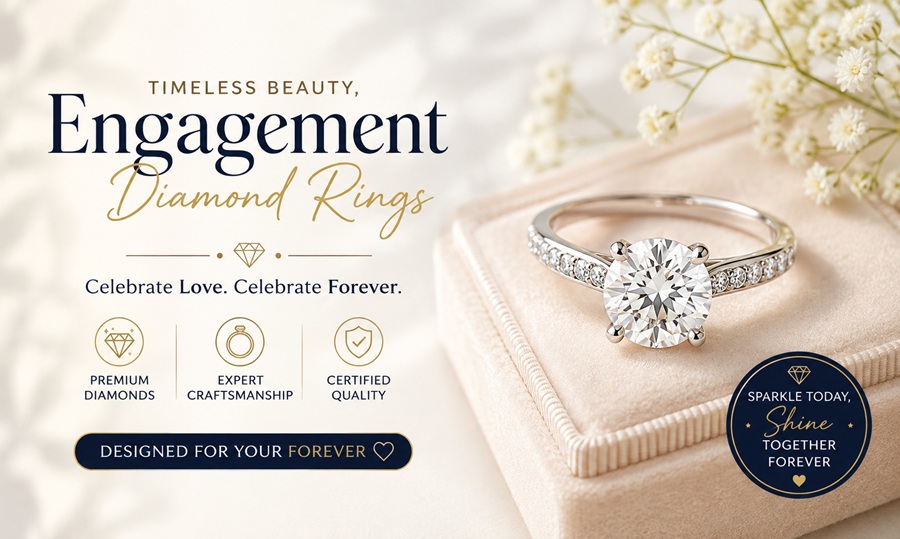
Engagement diamond rings are best chosen by balancing the 4Cs — cut, color, clarity, carat — against your budget, with cut typically prioritized for sparkle. Round and oval remain the most popular shapes, and certified stones from GIA or AGS labs offer the most buying confidence.
Why the Diamond Still Anchors the Engagement Ring
Despite a wave of alternative gemstones entering the market over the last decade, the diamond remains the default choice for engagement rings across the US, UK, Canada, and Australia. Its durability, brilliance, and cultural symbolism make it a practical and sentimental favorite — but that popularity also means buyers face a dense, sometimes confusing marketplace of grading terms, price tiers, and retailer claims.
Part of the diamond’s staying power comes down to physics as much as tradition. Diamonds rank a 10 on the Mohs hardness scale, making them the hardest naturally occurring material on earth and, practically speaking, a stone that can be worn daily for decades without significant wear. That durability matters more for an engagement ring than almost any other piece of jewelry, since it’s typically worn every day, through cooking, cleaning, exercise, and everything else life throws at a hand.
This guide breaks down what actually matters when shopping for an engagement diamond ring, so you can make a confident purchase rather than an anxious one. We’ll walk through the grading system jewelers use, the shapes currently trending, how to think about budget without falling for outdated rules, and the red flags that separate a trustworthy retailer from one to avoid.
Understanding the 4Cs
Every diamond is graded on four factors, and understanding how they interact — rather than treating each in isolation — is the single biggest lever for getting more ring for your money. Jewelers and grading labs didn’t invent this framework arbitrarily; it emerged because these four variables are the ones that most directly affect how a diamond looks and what it’s worth.
The mistake most first-time buyers make is assuming these four factors matter equally, or that a higher grade is always worth the added cost. In practice, cut has an outsized effect on visual brilliance, while extremely high color and clarity grades often deliver diminishing returns once a stone is already eye-clean and near-colorless to the naked eye.
| Factor | What It Measures | Buying Tip |
| Cut | How well the diamond reflects light | Prioritize this first — a well-cut diamond looks brighter even at a lower carat |
| Color | Presence of yellow tint, graded D–Z | G–I grades look colorless to the naked eye and cost less than D–F |
| Clarity | Internal and surface flaws | VS1–VS2 is eye-clean for most people and far cheaper than flawless grades |
| Carat | Weight of the stone | Shopping just under round numbers (0.9ct vs 1.0ct) can save significantly |
Cut: The Factor Most Buyers Underestimate
Cut grade describes how precisely a diamond’s facets have been proportioned and polished to interact with light — not the shape of the stone, which is a separate decision entirely. A diamond graded Excellent or Ideal cut will appear brighter and more brilliant than an identically sized, colored, and clarity-graded stone with a Good or Fair cut, sometimes dramatically so. Many jewelers recommend that if you have to compromise somewhere in your budget, compromise on carat weight before you compromise on cut, since a smaller, well-cut diamond will often out-sparkle a larger, poorly cut one.
Color and Clarity: Where the Naked Eye Stops Noticing
Color grading runs from D (completely colorless) to Z (noticeably tinted). For most buyers, grades between G and I offer a stone that appears colorless in normal lighting while costing meaningfully less than D-F grades, which are largely valued by collectors and connoisseurs rather than being visibly different to an average observer.
Clarity works similarly. The scale runs from Flawless down through Included grades, based on the size, number, and location of internal inclusions and surface blemishes. VS1 and VS2 grades are considered “eye-clean,” meaning any imperfections are invisible without magnification, making them a far more cost-effective choice than VVS or Flawless grades for anyone not specifically chasing investment-grade rarity.
Popular Diamond Shapes in 2026
Shape affects both price per carat and how large a stone appears on the hand — an important distinction from cut grade, which measures craftsmanship within a given shape rather than the shape itself.
- Round brilliant — maximum sparkle, highest price per carat due to cutting waste and enduring demand
- Oval — elongates the finger, appears larger than its carat weight thanks to its elongated silhouette
- Cushion — soft, romantic outline with strong fire, popular for vintage-inspired settings
- Emerald cut — clean lines, shows clarity more than sparkle, so buyers often size up in clarity grade to compensate
- Pear and marquise — distinctive silhouettes for those wanting something less traditional, both known for making fingers appear slimmer
- Radiant and princess cuts — square or rectangular outlines that combine brilliance with a more modern, geometric look
Setting Your Budget
The old “two months’ salary” rule is outdated marketing, not financial advice — it originated from a De Beers advertising campaign decades ago and has no real bearing on what any individual couple should actually spend. A more useful approach is deciding on a comfortable number first, based on your actual finances and priorities, then working backward through the 4Cs to find the combination that fits it.
Many couples now shop together for exactly this reason — it removes guesswork and surprise, and it ensures the ring reflects both partners’ financial comfort level rather than one person’s assumptions about what’s expected. This shift toward joint or at least semi-transparent ring shopping has become increasingly common, particularly among couples who’ve been together for years and already manage shared finances.
Where to Buy: Retailer vs Online
Brick-and-mortar jewelers offer the advantage of seeing the stone in person and building a relationship for future resizing or servicing. There’s real value in trying rings on, seeing how a stone catches light under different conditions, and having a local relationship for warranty work or future adjustments.
Online retailers, meanwhile, typically offer larger inventories and lower markups since they carry less overhead — no physical storefront, smaller sales staff, and often direct relationships with diamond cutters that cut out several layers of markup. Many online retailers now also offer virtual try-on tools and detailed 360-degree stone videos that go a long way toward closing the gap with in-person shopping.
Whichever route you choose, insist on independent certification — GIA and AGS are the two most trusted labs — and avoid retailer-only “in-house” grading reports, which are not held to the same rigorous, standardized criteria as independent labs and can sometimes inflate a stone’s actual grade.
Red Flags to Watch For
A few warning signs should make you pause before purchasing, regardless of how appealing the price or presentation looks:
- No independent certification offered, or certification only from an unrecognized in-house lab
- Pressure to “buy today” for a limited discount that conveniently resets whenever you visit
- Vague language around treatments (e.g., laser drilling, fracture filling, or HPHT treatment) not disclosed upfront
- Return policy shorter than 30 days, or one riddled with restocking fees and exceptions
- Reluctance to provide the stone’s certificate number so you can verify it directly with the grading lab
Choosing a Metal Band
The metal setting deserves nearly as much thought as the stone itself, since it affects both durability and daily comfort. Platinum is the most durable and hypoallergenic option, making it a popular choice for buyers who want a setting that holds up to decades of daily wear with minimal maintenance, though it comes at a higher price point than gold alternatives.
White gold offers a similar look to platinum at a lower cost, but requires periodic rhodium replating to maintain its bright white finish, since the rhodium coating wears down over years of wear. Yellow and rose gold have both seen a resurgence in popularity, particularly for vintage-inspired and mixed-metal designs, and neither requires replating the way white gold does.
Band width and thickness also matter more than many buyers initially realize. A thinner band shows off a center stone more dramatically but may bend or wear faster over decades of daily use, while a thicker band offers more durability at the cost of a slightly heavier overall look on the hand.
Understanding Diamond Certification Reports
A certification report, sometimes called a grading report, is an independent document verifying a diamond’s 4C characteristics along with its measurements, proportions, and any treatments. GIA (Gemological Institute of America) and AGS (American Gem Society) are widely considered the gold standard, using consistent, rigorous criteria that don’t vary based on who submitted the stone.
Some retailers issue their own “in-house” reports or use lesser-known labs with looser grading standards, which can make a stone appear higher quality on paper than it actually is. Always cross-check a certificate number directly on the issuing lab’s website — GIA, for instance, offers a free online report-checking tool — to confirm the report is legitimate and matches the stone you’re being shown.
Frequently Asked Questions
| Question | Answer |
| What is the most cost-effective diamond shape? | Round brilliant diamonds command the highest price per carat due to cutting waste and demand, so shapes like oval, cushion, or pear typically offer more visual size for the same budget, often appearing 10-15% larger than their round counterparts at the same carat weight. |
| Is a lab-grown diamond a good alternative? | Lab-grown diamonds are chemically, physically, and optically identical to mined diamonds and typically cost 30-40% less, making them a strong option for buyers prioritizing size and clarity over rarity or resale value, since they don’t carry the same collector premium. |
| What carat size is considered average for an engagement ring? | In the US, the average engagement diamond falls between 1.0 and 1.5 carats, though this varies significantly by region, age group, and budget — many buyers in the UK and Australia trend slightly lower, closer to 0.7 to 1.0 carats on average. |
| Should I buy a certified or non-certified diamond? | Always choose a certified diamond from an independent lab like GIA or AGS — certification protects you from inflated grading claims, gives you a documented basis for insurance appraisal, and preserves resale value far better than an uncertified stone. |
| How long does it take to have a ring custom made? | Custom engagement rings typically take four to eight weeks from design approval to delivery, so plan accordingly if timing matters for a proposal, and build in extra buffer time around holiday seasons when jewelers are busiest. |
| What’s the difference between a mined and lab-grown diamond on paper? | Certification reports typically note the origin as mined or laboratory-grown, but the 4C grading criteria applied are otherwise identical, since the two materials share the same chemical and optical properties. |
| Should I buy the setting and stone separately or together? | Buying separately can offer more flexibility and sometimes better pricing, particularly online, but buying together from a single retailer often simplifies warranty coverage and future resizing service. |
Buying an engagement diamond ring doesn’t need to be intimidating once you understand what actually drives value: cut quality, independent certification, and a shape that suits the wearer’s style and lifestyle. Set a budget first, prioritize cut over carat when trade-offs arise, and don’t be afraid to consider lab-grown diamonds or slightly-under-round carat weights to stretch your money further without sacrificing visual impact. Pay equal attention to the metal band, since it affects both comfort and long-term durability, and always verify certification directly with the issuing lab before finalizing a purchase. A well-chosen ring is one that reflects thoughtful research and genuine care, not just a big price tag — and armed with the framework above, you’re now equipped to shop with confidence rather than guesswork.